
 Google


Trusted Resources: News & Events
Latest announcements and gatherings
My medical school lesson was tinged with racism. Did that affect how I treated a sickle cell patient years later?
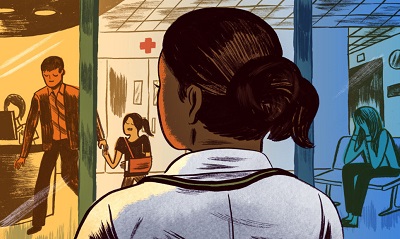
The young woman was curled up in a ball. She was sweating and shivering from pain. As she answered my questions, all my many, many questions, tears fell silently from her eyes.
I was a third-year medical student, and the resident I was working with had asked me to evaluate this woman. She had been here several times before. She was in the middle of a sickle cell crisis.
I remembered this young woman while reading STAT’s recent story about how too many patients with sickle cell face exhausting, infuriating and life-threatening delays in getting care when they arrive in emergency rooms in excruciating pain from a restricted flow of oxygen to their organs.
Thinking back, I’ve recognized the truth of that article: We don’t always take sickle cell seriously. I realized, too, that I, a doctor of color, might be complicit in bias against these patients. The more I think about it, the more I realize how deep the roots of that injustice stretch.
 +myBinder
Related Content
-
Today’s Faces of Sickle Cell Disease: Carolyn Rowley, PhDCarolyn Rowley is a psychologist, patien...
-
Charles Jonassaint, PhDDr. Jonassaint is a practicing clinical ...
-
Ugochi O. Ogu, MDDr. Ogu currently serves as an Assistant...
-
Prognostic factors of disease severity in infants with sickle cell anemia: A comprehensive longitudinal cohort studyIn order to identify very early prognost...
-
Perception and communication of life expectancy and prognosis in sickle cell disease: a multi-center study of adoles...Background: Sickle cell disease (SCD) is...
-
Sancilio Pharmaceuticals Company, Inc. Announces Completion of Enrollment in the SCOT Trial in Pediatric Patients Wi...Sancilio Pharmaceuticals Company, Inc. (...
-
Today’s Faces of Sickle Cell Disease: Tanielle RandallIt was not until their daughter was born...
To improve your experience on this site, we use cookies. This includes cookies essential for the basic functioning of our website, cookies for analytics purposes, and cookies enabling us to personalize site content. By clicking on 'Accept' or any content on this site, you agree that cookies can be placed. You may adjust your browser's cookie settings to suit your preferences. More Information
The cookie settings on this website are set to "allow cookies" to give you the best browsing experience possible. If you continue to use this website without changing your cookie settings or you click "Accept" below then you are consenting to this.
Powered by


SomeBodyToTalkTo connects people affected by rare diseases with trusted resources, supportive communities, and opportunities to share their experiences.